A guide to hiking Half Dome

Half Dome is the most iconic rock face in Yosemite Valley and definitely one of its most popular hikes. Thousands of visitors hike the trail each summer for the chance to experience the unbeatable panorama from the top of Yosemite. Here are a few common questions about this popular hike in Yosemite National park.
How far is the hike to Half Dome?
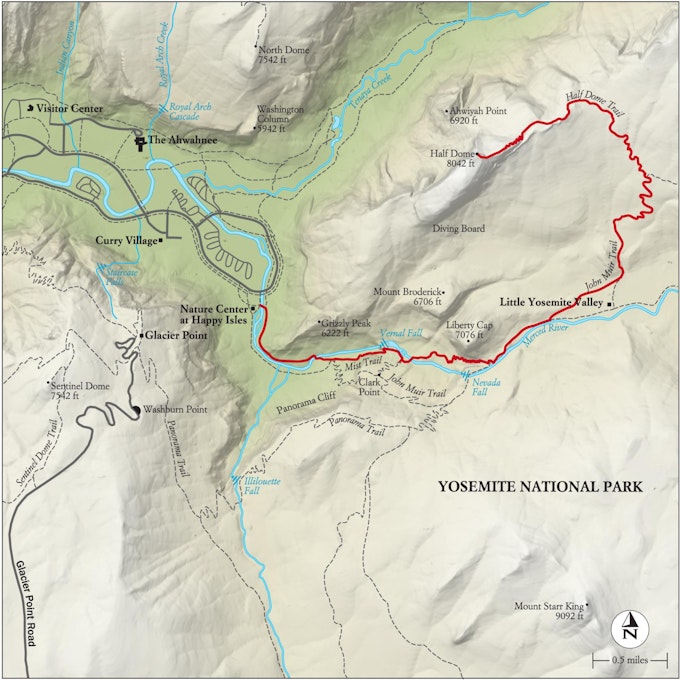
The trail is a strenuous 14-16 miles, with 4800ft of elevation gain. You'll start at the Happy Isles trailhead, winding up past Vernal and Nevada Falls, Little Yosemite and finally reaching the infamous cables for the final ascent up the rock face.
Where is the trailhead for Half Dome?
The trailhead is at Happy Isles, which is reached via the Yosemite Valley shuttle. Because it's such a long hike, many people leave early in the morning before the shuttles are running and start from Curry Village, which adds a bit of addition mileage, although not much.
How difficult is it to hike Half Dome?
This is definitely a strenuous hike that should be taken seriously, both in mileage and elevation. Additionally, temperatures in Yosemite Valley in the summer can be quite hot, so make sure you take plenty of water. Most rescue calls each year on Half Dome are due to hikers that are unprepared, dehydrated, or simply out of shape. Don't let that be you.
Do you need a permit to hike Half Dome?
Yes, you need a permit to hike Half Dome. A permit is required when the cables are up, which is generally from May until October, depending on weather. Permits are available by lottery beginning in March, with a limited number available two days in advance. The park service issues permits for 300 hikers a day to hike Half Dome. You can visit Recreation.gov to get a Half Dome Day Hike permit.
Are the Half Dome cables dangerous?
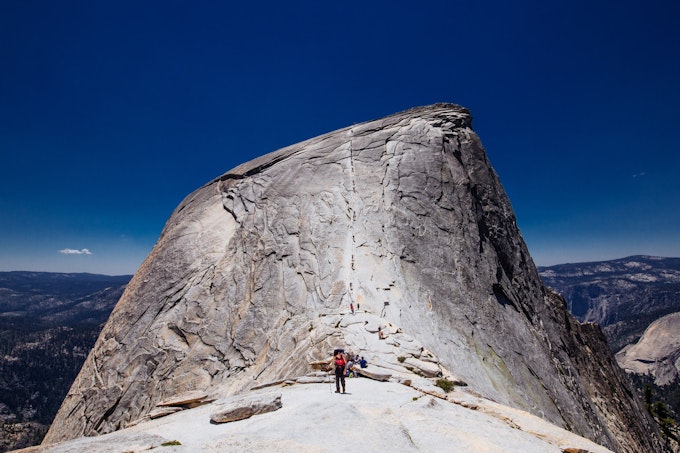
Most of the hike is on an excellent, well-tracked hiking trail, with the main danger being dehydration. The final "cables" section of the route is a very steep, 400ft section where the park service has bolted cables and footholds into the rock. Take your time, relax, and consider bringing gloves for this part of the hike. While there have been deaths on this part of the route, most accidents here happen in inclement weather when the rock can get slick or when hikers didn't exercise proper caution.